What is Trento?
Trento is the official version of the Trento community project. It is a comprehensive monitoring solution consisting of two main components: the Trento Server and the Trento Agent. Trento provides the following functionality and features:
-
A user-friendly reactive Web interface for SAP Basis administrators.
-
Automated discovery of Pacemaker clusters using SAPHanaSR classic or angi as well as different fencing mechanisms, including diskless SBD.
-
Automated discovery of SAP systems running on ABAP or JAVA stacks and HANA databases.
-
Awareness of maintenance situations in a Pacemaker cluster at cluster, node, or resource level.
-
Configuration validation for SAP HANA Scale-Up Performance/Cost-optimized, SAP HANA Scale-out and ASCS/ERS clusters deployed on Azure, AWS, GCP or on-premises bare metal platforms, including KVM and Nutanix.
-
Useful information that offers insights about the execution of configuration checks.
-
Delivery of configuration checks decoupled from core functionality.
-
Email alerting for critical events in the monitored landscape.
-
Integration of saptune into the console and specific configuration checks at host and cluster levels.
-
Information about relevant patches and upgradable packages for registered hosts via integration with SUSE Multi-Linux Manager.
-
Monitoring of CPU, memory, filesystem and swap usage at host level through basic integration with Prometheus.
-
API-based architecture to facilitate integration with other monitoring tools.
-
Rotating API key to protect communication from the Trento Agent to the Trento Server.
-
AI assistance via Model Context Protocol (MCP) integration.
-
Housekeeping capabilities.
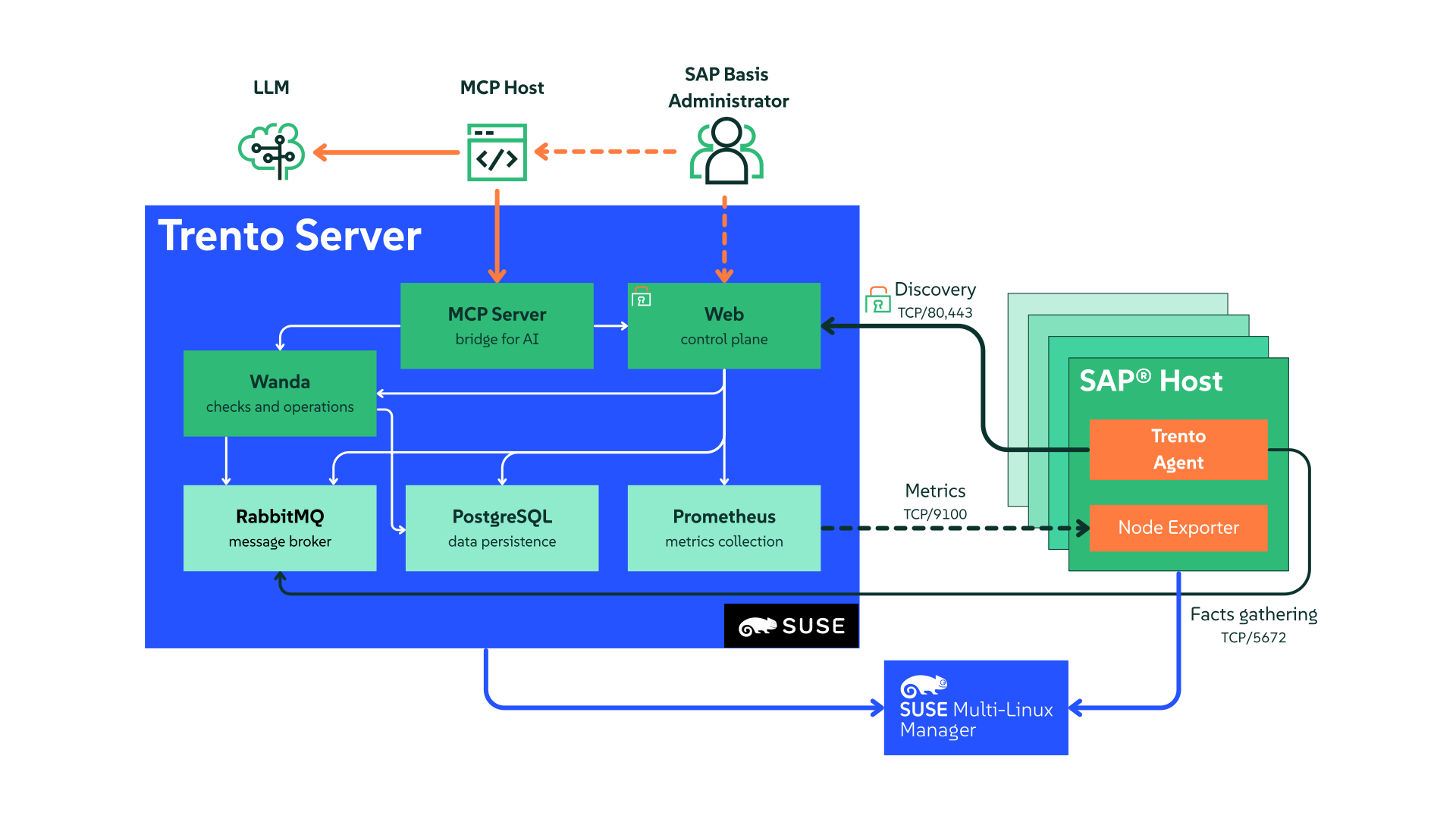
Trento Server
The Trento Server is an independent, distributed system designed to run on a Kubernetes cluster or as a regular systemd stack. It provides both a Web front-end for user interaction and backend APIs for automation and integration with components such as the Trento MCP Server. Together with the optional Trento MCP Server, it enables secure, AI-assisted operations by exposing Trento Server APIs for natural-language interactions with tools like MCPHost, Copilot, Claude, and SUSE AI.
The Trento Server consists of the following components:
-
The Web component that acts as a control plane responsible for internal and external communications as well as rendering the UI.
-
The orchestration engine named Wanda that orchestrates the execution of compliance checks and operations.
-
The Trento MCP Server which creates a secure bridge between the infrastructure data collected by Trento and your Large Language Model (LLM) of choice.
-
A PostgreSQL database for data persistence.
-
The RabbitMQ message broker for communication between the orchestration engine and the agents.
-
A Prometheus instance that retrieves the metrics collected by the Prometheus node exporter in the registered hosts. This Prometheus instance is optional in a systemd deployment.